Shop CAT Diagnostic Tools
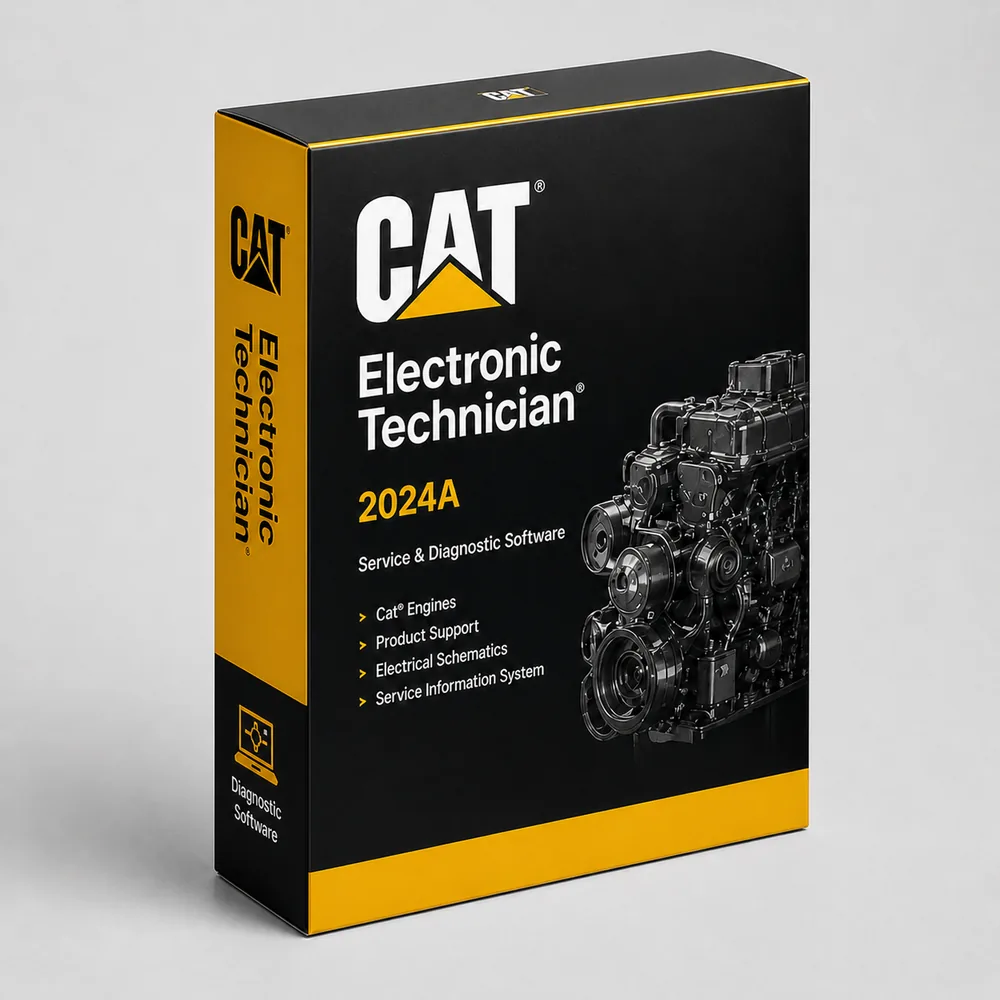
Cat Electronic Technician (Cat ET) is the OEM diagnostic platform for Caterpillar on-highway and off-highway engines. C13 and C15 ACERT through current cleaner-ACERT systems, off-highway machines, and the broader Cat C-series lineup. Pairs with the Cat Communication Adapter III/IV.
- OEM-Level Software
- On-Highway & Off-Highway
- Calibration Files
- Ash Service Regen
Featured CAT Products
View All CAT Products →CAT Complete Fleet Diagnostic Kit
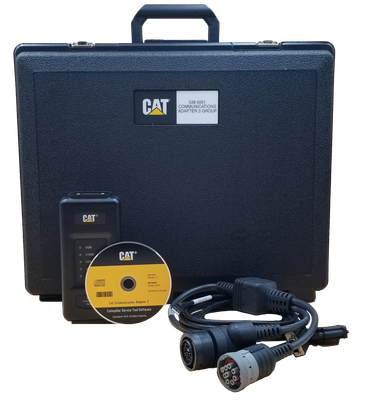
Everything you need for full-system diagnostics and programming.
CAT Advanced Handheld Scanner
All-systems scanner with bi-directional controls.
CAT Diagnostic Software
Powerful software for advanced diagnostics and programming.
Why Choose CAT?
- Comprehensive vehicle coverage
- OEM-level diagnostics & programming
- Regular software updates & releases
- Rugged hardware built for the shop
- Backed by HDT expert support
Shop CAT by Category
Find the Right CAT Tool
Answer a few quick questions and we'll help you find the best tool for your shop's needs.
- Personalized Recommendations
- Expert Guidance
- Fast & Easy
Trusted by Shops & Fleets Nationwide
"CAT gives us the coverage and reliability we need. HDT support is second to none."
Mike R.Diesel Tech — Midwest Fleet"The software is powerful and easy to use. Programming and diag in one platform saves us time and money."
James T.Shop Owner — Texas"HDT's ready-to-run kit had everything we needed to get started right out of the box."
Sarah L.Fleet Manager — California"Great tools, great support, and fast shipping. Our go-to for heavy duty diagnostics."
David P.Lead Tech — FloridaPowerful Diagnostics. Proven Performance.
Capabilities vary by tool, software license, vehicle, and manufacturer requirements. Contact HDT to confirm compatibility.
Caterpillar is one of the most awkward brands a heavy-duty shop has to deal with, and the awkwardness has nothing to do with the hardware. The hardware is fine. CAT engines are some of the most over-built diesels ever bolted to a frame rail. The awkwardness is that CAT walked away from the on-highway truck engine business in 2010, and the rest of the truck industry has spent fifteen years pretending that decision settled the question. It did not. There are still hundreds of thousands of 3406E, C-12, C-13, and C-15 powered trucks rolling, hauling, and breaking down every day in North America. They come into shops. They need work. And the diagnostic side of that work is where most of the friction lives, because CAT's official toolchain is dealer-controlled, the legitimate licensing path for Cat ET runs through that dealer channel, and the aftermarket landscape for CAT is genuinely uneven depending on whether you are looking at a 2006 W900 with a C15 or a brand-new C32 marine genset.
Then there is the other half of CAT, the half that never went anywhere. Off-highway, industrial, marine, power generation. CAT is not a niche player there, CAT is the market in big swaths of it. The C9.3, C13, C15, C18, C27, and C32 platforms run dozers, excavators, mining trucks, gensets, push boats, yachts, and gas compression. If your shop touches any of that, the CAT side of your business is growing, not shrinking. The right tooling depends entirely on which of those two worlds you live in, and most shops live in both.
Who Caterpillar Is
Caterpillar Inc. is headquartered in Deerfield, Illinois, after relocating from its long-time Peoria home a few years back. The company is the largest construction and mining equipment manufacturer on the planet, and the engine and power systems division is one of its core business lines. CAT's engines do not just go into yellow iron with the company's own name on it. They go into other people's chassis, other people's gensets, other people's marine packages, and historically into Class 8 trucks built by Kenworth, Peterbilt, Mack, Freightliner, Western Star, and others. The engines are designed in Lafayette, Indiana, and Mossville, Illinois, and they are built in plants across the U.S. and globally.
The point worth keeping in mind when you are deciding what tools to put in front of a tech is that CAT's engine business is not organized around the on-highway truck market the way Cummins or Detroit's engine business is. CAT's center of gravity has always been off-highway. On-highway was a sideline, an important one, but a sideline. That history shapes everything about how CAT supports its engines today, including how the diagnostic software is licensed and how parts and service are channeled.
The On-Highway Legacy: 3406, C-Series, ACERT, and the 2010 Exit
The on-highway legacy is the part most truck shops care about, so worth walking through it carefully.
The 3406 was CAT's flagship Class 8 engine for decades. The 3406A ran from 1973 through 1987, the 3406B from 1987 to 1993, the 3406C from 1993 to 1998 (overlapping with the 3406E from 1993 forward), and the 3406E carried the line until 2007 in some applications. The 3406E was a big deal because it was CAT's first fully electronically controlled big-bore truck engine, and it set the template for everything that followed. Power ratings ran from about 375 to 550 horsepower depending on the application.
In 1999 the C15 replaced the 3406E. Mechanically the early C15 was very close to the 3406E, with refinements to chase tighter EPA emissions targets. Alongside the C15 you had the C-12, the C-11, the C-10, and on the smaller end the C7 and C9 for medium-duty truck and bus work. The 3176 lived earlier in that smaller range. None of these engines went away quietly. They just got tougher to keep emissions-compliant.
Then came ACERT. Advanced Combustion Emissions Reduction Technology was CAT's bet that they could meet 2007-and-later EPA standards without going to selective catalytic reduction. The C15 ACERT, the C13 ACERT, and the smaller C7 ACERT all used twin sequential turbochargers, more aggressive cooled EGR, and a diesel particulate filter, but no DEF. Inside the C15 ACERT family you have to know your serial prefixes. BXS came first, MXS and NXS followed with revised intake valve actuation hardware and one-piece VVA/Jake brake housings, and the SDP closed out the run with ball-bearing turbo cartridges replacing the older journal-bearing setup. Turbo parts cross between BXS, MXS, and NXS but not to SDP. That is the kind of detail that bites parts counters when an order goes out wrong.
ACERT got CAT to 2007. It did not get them to 2010. The 2010 EPA targets effectively required SCR and DEF, and the path to making ACERT meet those numbers reliably without aftertreatment urea came down to engineering tradeoffs CAT was not willing to make. There was also a fleet of 2007-2010 C13 and C15 trucks in the field with documented DPF regeneration problems that became the basis for years of litigation and warranty headaches. Caterpillar announced in 2008 it would exit on-highway in North America, the last on-highway engines came off the line in 2010, and CAT pivoted to a partnership with Navistar on the CT660 vocational truck (which used a Navistar-built engine wearing CAT badges, not a real CAT on-highway engine, and that whole effort fizzled by 2016).
The shop-floor consequence of all that history is simple. Every 3406E, C7, C9, C10, C11, C12, C13, C15, and C16 truck on the road today is running on engines that have not been built since at most 2010, and on the on-highway side most of them stopped being built well before that. Parts are still available. Service information is still available. Cat ET still talks to them. But the manufacturer is not actively developing new diagnostic content for these engines, and the dealers' attention is increasingly elsewhere. Independent shops are where these trucks go, and the diagnostic toolchain question matters more, not less, because the dealer is rarely the right answer for a 2005 C15 with an intermittent miss.
The Off-Highway and Industrial Side
Outside the on-highway story, CAT is going strong. The C-series carries straight through into off-highway with the C9.3, C13, C15, C18, C27, and C32, and above that you have the 3500-series and beyond for mining trucks, large marine vessels, and big standby gensets. These are not the same engines as the on-highway versions despite shared model numbers. A C13 in a wheel loader is a different animal from a C13 in a 2008 sleeper truck. Different ECM strategy, different aftertreatment if any, different rating structure, different parameters.
The C9.3 covers smaller industrial and marine genset work, common rail fuel system, electronic governor, EMCP integration. The C13 and C15 industrial engines power wheel loaders, gensets, and a long list of industrial pumps and compressors. The C18 is the workhorse of the heavy industrial range, sitting in the 600-800 horsepower band. The C27 and C32 are V-12s that push into the 1,000+ horsepower bracket for big mobile equipment, marine main propulsion, and standby gensets. The C32 specifically dominates yacht repower work, offshore supply boats, and a chunk of the standby genset market in the megawatt class.
From a diagnostic perspective, these are the engines where Cat ET is genuinely the right tool, where dealer-level coverage matters, and where serious aftermarket platforms have invested heavily because the equipment volume is large and the dealer network is not always close at hand. A logging crew in northern Michigan, a marine yard in Louisiana, a quarry in central Pennsylvania — the nearest CAT dealer might be a hundred miles away, and the engine is down today.
Cat ET (Caterpillar Electronic Technician)
Cat ET is Caterpillar's official Windows-based diagnostic application. It connects to CAT ECMs through a supported communication adapter, reads and clears codes across all CAT-controlled systems on the engine and machine, displays live parameter data, runs cylinder cutouts and injector tests, performs forced regenerations on equipped engines, lets you view and edit configurable parameters, supports flash programming of new ECM software files, and integrates with the CAT Factory Password System for parameters that require dealer authorization. Cat ET is the canonical tool. There is no aftermarket equivalent that will do everything Cat ET does on a CAT engine. Anyone who tells you different is selling something.
The licensing reality is the part shops need to be honest about. Cat ET is not sold the way a JPRO subscription or a Jaltest annual renewal is sold. Caterpillar licenses Cat ET through its dealer channel, and the license tiers are stratified. The top tier (commonly referred to internally as JERD2129) is the full service dealer level. There are lower tiers (often called Tech Tool or customer/fleet level) that have reduced functionality and reduced access to factory-protected parameters. A legitimate Cat ET license costs real money, has to be re-subscribed, and is intended primarily for dealers, OEMs that build CAT-powered equipment, and large fleet customers with formal service relationships.
The internet is full of cheap "Cat ET" downloads at $85 with cracked activation. Independent shops know they exist. We will not pretend otherwise. We will also not pretend they are a clean answer. Those copies are unsupported, they are typically a snapshot of an older version that will not get updates, the factory password generators that come with them put the user in a legally questionable position with respect to Caterpillar's terms, and they make it impossible to call the dealer for help when something goes sideways. If your business is running a fleet of late-model CAT equipment, the legitimate licensing path is uncomfortable but it is the path. If your business is keeping a 2006 C15 truck on the road and the customer needs the truck back tomorrow, the practical answer for most shops is to lean on aftermarket coverage that does most of what you need legitimately, and reserve a relationship with a CAT dealer for the parameter changes and reflashes that genuinely require Cat ET.
Version-wise, Cat ET has been on a yearly release cadence — 2018A, 2019A, 2019C, 2021A, 2022A, 2023A, 2024A, 2025A, and 2026A as of recent releases. Newer versions add support for newer engines and machines. Older versions still talk to older equipment. There is no scenario where the latest version refuses to talk to a 3406E, but there are scenarios where you genuinely need a current dealer-tier license to do specific work on a current C32 marine package.
Cat Communication Adapter III
The Cat Communication Adapter III, often written CA III or ECA III, is the official interface between a laptop running Cat ET and the engine. CAT part numbers people see most often include 317-7484, 317-7485, 317-7486, 466-6258, and 538-5051 depending on the kit. It replaced the older Cat Communication Adapter II. It is RP1210-compliant, which means it will work as a communication adapter for other RP1210-aware diagnostic applications — JPRO, Jaltest, TEXA, Diesel Explorer, and others can use a CA III as their data link to a CAT engine. It supports Caterpillar Data Link (CDL), J1939, and J1708/J1587 buses, which is what you want when you are talking to a mid-2000s CAT that runs proprietary CDL alongside J1939 for chassis comms.
The practical question shops always ask is whether they need the actual Cat CA III or whether their existing Nexiq USB Link 3, Noregon DLA+ 2.0, or Drew Tech adapter is enough. The answer depends on what you are doing. For pure J1939 reads on a late-model CAT, an RP1210 adapter from any of the major aftermarket brands will work fine for code reads, live data, and basic bi-directional commands within the limits of the diagnostic software. For full Cat ET functionality including reflashing, parameter programming with factory passwords, and proprietary CDL access on older engines, the official CA III is the safe answer. Some shops run both — a Nexiq for everyday code reads and JPRO work, and a CA III on the Cat ET laptop for the deeper jobs. That is the pattern most working CAT shops settle into.
What You Can and Cannot Do With Aftermarket Tools
This is the section everyone wants and almost no website will write honestly. Here is the working tech's read.
Jaltest has, in our opinion, the strongest off-highway CAT coverage of any aftermarket platform. Jaltest OHW will read and clear faults across CAT engine, transmission, and machine ECMs on a long list of CAT off-highway equipment, run forced regens, perform cylinder cutouts, injector trim coding on supported engines, hydraulic calibrations on the machine side, and many of the routine service procedures a dealer would do. It will not replace Cat ET for factory-password parameter changes or for flashing ECM software, and it does not pretend to. On the on-highway side, Jaltest CV (the truck product) covers the C7, C13, C15, and related on-highway CAT engines at a usable level — codes, live data, regen, basic resets — but the on-highway CAT product is not where Jaltest is strongest. Jaltest is what we recommend first for any shop whose CAT exposure is mostly equipment.
TEXA Off-Highway is the other serious option. TEXA's OHW software covers CAT, Komatsu, Volvo CE, Case, John Deere, and the other big off-highway brands, with strong bi-directional functionality, stationary regens, hydraulic calibrations, and electronic control resets. TEXA's strength relative to Jaltest depends a little on what brands of equipment dominate your work — the platforms trade punches and we would not call either one universally better. TEXA also has the advantage of not requiring an annual license to keep working at the version the user already has, which matters to budget-conscious shops.
JPRO Professional from Noregon is on-highway focused. JPRO covers CAT on-highway engines well — C7, C13, C15 ACERT, parked DPF regen on EPA 07 and EPA 10 engines, code reads, live data, and bi-directional. JPRO is the right call for a Class 8 truck shop where CAT-powered trucks are part of the mix alongside Cummins, Detroit, PACCAR MX, and the rest. JPRO does not cover off-highway CAT seriously and is not designed to.
Autel Commercial Vehicle scanners and FCAR heavy-duty handhelds will read and clear codes, show live data, and perform some bi-directional functions on CAT on-highway engines, with mixed results on older CDL-only engines and reasonable results on CAN-based later builds. They are useful at the price point and they will not replace a real laptop-based diagnostic platform. Cat ET is the only tool that does the deep dealer work, and shops that need to do that work either license Cat ET legitimately or maintain a working relationship with a dealer who will.
Common Service Pain Points on CAT Engines
The repeat-offender list on CAT is short and well known.
On the ACERT-era C13 and C15, regeneration problems dominate the call volume. Clogged DPFs, failed regen attempts, doser issues, EGR cooler failures, and the cascade of fault codes that follows are the bread and butter of on-highway CAT diagnostic work. The 2007-2010 emission systems on these engines were the subject of class-action litigation for a reason. Doing a successful forced regen, getting the soot loading numbers back to the right place, and isolating root cause between sensor failures, fuel system issues, and aftertreatment hardware is the work.
Exhaust temperature complaints, both on the on-highway ACERT engines and on later off-highway Tier 4 engines, often trace to inlet pressure or differential pressure sensors, doser injectors, or thermal management software calibration issues that need correct parameter values to be set in the ECM.
DEF and SCR systems on the off-highway Tier 4 Final engines (C9.3, C13, C15, C18 in Tier 4 Final guise) bring the same DEF quality, dosing, and crystallization issues that every other manufacturer's SCR system does. Cat ET handles these well. Aftermarket platforms handle most of it.
Fuel system work on the older C15 and 3406E is mostly mechanical, but injector trim coding on the HEUI and later electronic unit injector engines requires the right tool to update injector calibration codes after replacement. Get this wrong and the engine runs rough out of the gate.
ECM password gates are the last category. Performance changes, horsepower reratings, governor settings, and engine family rating swaps require factory passwords from CAT. There is no aftermarket bypass that we will recommend. If a customer wants a C15 reprogrammed to a higher rating, it goes through Cat ET with proper passwords.
What Your Shop Actually Needs
Three patterns cover most working shops.
If your CAT work is primarily on-highway legacy — 3406E, C7 through C15 trucks coming in for diagnostic and repair work — you want JPRO or Jaltest CV as the everyday tool, a Cat Communication Adapter III for the jobs that justify Cat ET, and either a legitimate Cat ET license or a working dealer relationship for the deep parameter and flash work. The CA III is the keystone purchase. Skipping it is a false economy.
If your CAT work is primarily off-highway and industrial — equipment, gensets, marine, ag-adjacent — you want Jaltest OHW as the daily driver, the Cat CA III for engine-side communication, and Cat ET for the work the aftermarket cannot legally do. TEXA Off-Highway is a fine alternative or addition to Jaltest. The off-highway side is where Cat ET licensing genuinely matters and where we have the most direct conversations with shop owners about the dealer-channel reality.
If you do both, and most heavy-duty shops do, the kit grows. JPRO for trucks, Jaltest OHW for equipment, a Cat CA III on the Cat ET laptop, and a sensible plan for ET licensing. We help shops put that combination together every week.
Aftermarket CAT Coverage Matrix
| Platform | On-Highway Legacy (3406E, C7-C15) | Off-Highway / Industrial (C9.3-C32) | Forced Regen | Reflash / Parameter Programming | Factory Passwords |
|---|---|---|---|---|---|
| Cat ET | Full | Full | Yes | Yes | Yes (with FPS access) |
| Jaltest OHW | Limited (use Jaltest CV instead) | Strong — codes, live data, regens, calibrations, injector trim on most | Yes on supported engines | No | No |
| Jaltest CV | Strong — codes, regen, live data, basic bi-directional | Limited | Yes on EPA 07/10 engines | No | No |
| TEXA OHW | Limited (use TEXA Truck instead) | Strong — comparable to Jaltest OHW | Yes on supported engines | No | No |
| JPRO Professional | Strong — full bi-directional, parked DPF regen | Not designed for it | Yes on EPA 07/10 engines | No | No |
| Autel CV / FCAR | Basic to moderate — codes, live data, some bi-directional | Basic | Limited | No | No |
Frequently Asked Questions
Can I still get Cat ET legally? Yes, but the path goes through a Caterpillar dealer or an authorized OEM channel. Subscriptions are tiered, with the dealer-level license carrying the broadest functionality and the highest price. Fleet and customer-tier licenses exist with reduced capability. The cracked $85 downloads on the open internet are not a legitimate license, and we do not recommend building a business on them. Call us at 866-217-0063 and we will walk through the realistic options based on what your shop actually does.
Will Jaltest do a forced regen on a C15? On a C15 ACERT on-highway truck, Jaltest CV (the on-highway product) is the right tool and yes, it will perform a parked regen on supported EPA 07 and 2010 builds. On a C15 industrial engine, Jaltest OHW will perform the regen on supported configurations. Both will pull active and pending fault codes, show live aftertreatment data, and let you confirm the regen completed cleanly.
What about the 3406E — does aftermarket cover it? The 3406E is old enough that it predates the EPA 07 aftertreatment generation entirely. Coverage on aftermarket tools is generally good for codes, live data, and basic ECM information through Caterpillar Data Link. Some bi-directional tests work, some do not, and some platforms have stronger CDL support than others. If you do a lot of 3406E work, a Cat CA III with Cat ET is the most complete answer. JPRO and Jaltest CV will cover the day-to-day diagnostic work without it.
I run mostly off-highway — Jaltest or TEXA? Both are good. The honest answer is that the choice often comes down to what brands of non-CAT equipment you also touch and which platform's interface your techs prefer. Jaltest tends to have a slight edge on CAT-specific functions and on the broader spread of construction equipment. TEXA has the licensing-cost advantage of not requiring annual renewal to keep working. Call us and tell us what mix of equipment you see — we will give you a straight recommendation rather than push the higher-margin product.
Do I need the Cat CA III specifically or is Nexiq enough? For pure RP1210 diagnostic work using JPRO, Jaltest, or TEXA on a CAT engine that talks J1939, a Nexiq USB Link 3 or Noregon DLA+ 2.0 will get the job done. For full Cat ET functionality including flashing, parameter programming, and Caterpillar Data Link access on older engines, the Cat CA III is the right adapter. Many shops run both. Given the price difference is not enormous and the CA III is the safe answer for any deep CAT work, our recommendation is usually to add the CA III rather than try to make do without it.
What about reflashing a C15 ACERT for a horsepower upgrade? This requires Cat ET, a Cat CA III, the correct flash file from Caterpillar, and factory passwords obtained through the CAT Factory Password System. It is a CAT dealer-channel job in the strictest sense. There are aftermarket performance modules that piggyback on the engine's signal wiring without touching the ECM software, and those have their place, but they are not a reflash. Be honest with the customer about which one you are doing.
Does Cat ET work on Windows 11? Recent versions, yes. Older Cat ET versions had compatibility issues with newer Windows builds. Cat ET 2024A and later are documented to run on Windows 10 and Windows 11. If you are setting up a new diagnostic laptop, this is the kind of thing we will sort out as part of getting your kit running.
Why Buy CAT Tools and Software From Heavy Duty Truck Diagnostics
The CAT side of the heavy-duty diagnostic business is where bad advice gets expensive fastest. A shop that buys the wrong scanner for a fleet of off-highway CAT iron, or that buys cracked Cat ET and finds out the hard way, is looking at thousands of dollars wasted and customers out of service. We have spent years on these tools, and we sell them because we use them.
Most of our sales close on the phone for a reason. Heavy-duty diagnostic kits are not a checkbox on a website. The right kit for a shop running a Western Star yard with a couple of C15 trucks is not the same kit for a logging operation with twenty pieces of CAT iron and a C32 tugboat in the marina. The right Cat ET licensing path for an independent shop is not the same as the right path for a 200-truck fleet. We will get on the phone with you, ask what your shop actually does, and help you spec the right combination of CAT-specific and aftermarket tools for the work in front of you.
We carry Cat ET-ready kits, Cat Communication Adapter III packages, full laptop bundles, and the major aftermarket platforms — Jaltest, TEXA, JPRO, Autel CV, FCAR — that share the load on CAT engines. We support what we sell, both during the install and afterward. If you need to talk to a real person who has actually done a forced regen on a C13 ACERT at 2 AM with a tow truck waiting, we are the ones to call.
Call 866-217-0063 for quick answers and help!
Frequently Asked Questions
Does Cat ET cover off-highway equipment?
Yes — Cat ET is the same platform across on-highway and off-highway. Skid steers, excavators, dozers, generators, and the rest of the Cat machine lineup all run through the same software with the right adapter and cable.
What is "Ash Service Regeneration" on Cat ET?
Cat names the ash counter reset routine "Ash Service Regeneration" — it is the service procedure to run after the DPF has been physically cleaned and reinstalled. Cat is the only OEM that uses this terminology, which confuses techs expecting a simple parameter reset.
Which adapter pairs with Cat ET?
The Cat Communication Adapter III or IV is the standard pairing. Both are CAN-capable and support the full Cat data protocol. We sell the genuine adapter — counterfeit Comm Adapters fail activation and damage ECMs.
Can Cat ET reflash a C15 ECM?
Yes — with the proper subscription tier and a calibration file from Caterpillar, Cat ET handles full reflash and module programming. We can confirm the licensing tier you need based on your shop work.
Resources & Buyer Guides
OEM vs Aftermarket Diagnostic Software
How to choose the right kit for your shop.
Read Guide →How to Choose the Right Heavy-Duty Scan Tool
Explore software features and capabilities.
Read Guide →What You Need for DPF Regens
Understanding the difference and when to use each.
Read Guide →
Ready to Upgrade Your Diagnostic Game?
Our experts are here to help you choose the right CAT solution for your shop. Call now or shop online today.