• Expert Support
  • Dealer Solutions

Shop PACCAR Diagnostic Tools

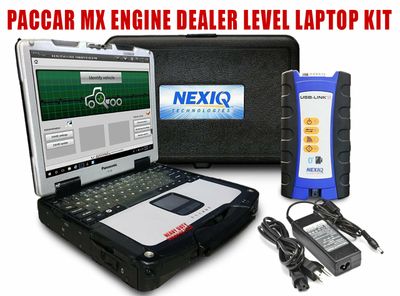
PACCAR DAVIE is the OEM diagnostic platform for the PACCAR MX-11 and MX-13 engines found in Peterbilt and Kenworth Class 8 trucks. DAVIE handles forced regens, ash resets, parameter changes, and module reflash on every modern MX platform. (Note: DAVIE 4 is the established North American release; DAVIE 5.x has been a DAF-Europe lineage — confirm current NA availability with us before you order.) Pairs with a Nexiq USB-Link 2 or 3.

  • OEM-Level Software
  • MX-11 / MX-13 Coverage
  • Peterbilt & Kenworth
  • Reflash & Parameter Writes
Professional DiagnosticsOEM-level capabilities for commercial trucks, buses, ag, construction & more.
Expert SupportU.S.-based technicians with dealer and fleet experience ready to help.
Ready-to-Run KitsPreconfigured software with everything you need to get up and running fast.
Financing Available0% APR options available on qualifying orders over $1,500.

Featured PACCAR Products

View All PACCAR Products →
Why Choose PACCAR?

  • Comprehensive vehicle coverage
  • OEM-level diagnostics & programming
  • Regular software updates & releases
  • Rugged hardware built for the shop
  • Backed by HDT expert support
OEM-Level Diagnostics
Wide Vehicle Coverage
Bi-Directional Controls
Programming & Coding
Active Software Updates
Trusted by Professionals

Shop PACCAR by Category

Find the Right PACCAR Tool

Answer a few quick questions and we'll help you find the best tool for your shop's needs.

  • Personalized Recommendations
  • Expert Guidance
  • Fast & Easy

Trusted by Shops & Fleets Nationwide

★★★★★

"PACCAR gives us the coverage and reliability we need. HDT support is second to none."

Mike R.Diesel Tech — Midwest Fleet
★★★★★

"The software is powerful and easy to use. Programming and diag in one platform saves us time and money."

James T.Shop Owner — Texas
★★★★★

"HDT's ready-to-run kit had everything we needed to get started right out of the box."

Sarah L.Fleet Manager — California
★★★★★

"Great tools, great support, and fast shipping. Our go-to for heavy duty diagnostics."

David P.Lead Tech — Florida

Powerful Diagnostics. Proven Performance.

Engine Diagnostics
Transmission Diagnostics
ABS & Brake Systems
DPF & Emissions Regeneration
Bi-Directional Controls
Calibrations & Programming
Parameter Changes

Capabilities vary by tool, software license, vehicle, and manufacturer requirements. Contact HDT to confirm compatibility.

Expert Phone SupportU.S.-based technicians
Setup & Training HelpGet started with confidence
Fast ShippingOrders ship same day
Warranty & SupportBacked by HDT
0% APR FinancingOn qualifying orders

PACCAR is the parent corporation behind Kenworth, Peterbilt, and DAF, and it is also an engine manufacturer in its own right. If you wrench on Class 8 trucks in North America, you are working on a PACCAR product more often than you probably realize. The MX-13 alone is sitting in a huge slice of the T680 and 579 fleet rolling past your shop every day, and the MX-11 has been quietly taking over regional and vocational work since 2015. The PX-7 and PX-9 fill in the medium-duty side. They are physically Cummins ISB and ISL engines under PACCAR badging, but they are calibrated and supported as PACCAR powertrains.

The diagnostic story on PACCAR is its own animal. Of all the major North American OEMs, PACCAR runs the most locked-down service environment. The OEM software, DAVIE4, is not something you walk in and buy off a shelf the way you can with Cummins INSITE or Detroit DiagnosticLink. The companion tool, ESA (Electronic Service Analyst), has even tighter dealer-portal authentication around it. That reality shapes every conversation we have with shops calling about PACCAR coverage. This page lays out the engines, the trucks, the software, the adapter setup, and the honest line between what aftermarket tools can do and what still has to go through a Kenworth or Peterbilt dealer.

Who PACCAR Is

PACCAR Inc. is one of the largest commercial truck manufacturers on the planet. Headquartered in Bellevue, Washington, it owns three truck brands that share an engine and electronics platform: Kenworth (Seattle), Peterbilt (Denton, Texas), and DAF Trucks (Eindhoven, Netherlands). It also owns PACCAR Parts, PACCAR Financial, PACCAR Engine Company, and a network of dealer groups across North America, Europe, Australia, and Brazil. That scale is part of why PACCAR's authentication walls are so tight. They are protecting an enormous installed base and a vertically integrated dealer channel.

For a tech, the practical takeaway is that Kenworth and Peterbilt are mechanical twins with different sheet metal, different cab interiors, and different corporate dealer networks. The engine ECM, aftertreatment system, transmission controllers, ABS modules, and body controllers are largely common architecture. A diagnostic procedure that works on a 2022 Kenworth T680 with an MX-13 will work the same way on a 2022 Peterbilt 579 with an MX-13. The DAF side of the house in Europe runs a parallel but separate diagnostic universe, which is where the older DAVIE 5 references you sometimes see online actually originate.

The PACCAR Engine Lineup

There are four engines worth knowing, and they split cleanly into two families.

PACCAR MX-13. 12.9-liter inline six. Common-rail fuel injection at high pressure, twin-canister SCR aftertreatment in the current CARB-compliant configuration, compacted graphite iron block. Power ratings on the current generation run from 405 hp / 1,650 lb-ft on the lighter line-haul tune up to 510 hp / 1,850 lb-ft on the top rating. This is the bread-and-butter PACCAR Class 8 engine and what most of your MX-related shop calls will be about. EGR, DEF, DPF, NOx sensors, EGR cooler, fuel injectors, turbo actuators. Standard heavy-duty diesel pain points.

PACCAR MX-11. 10.8-liter inline six, also CGI block, also common-rail. Roughly 400 lbs lighter than the MX-13, which matters for tankers, bulk haulers, refuse, and vocational where payload counts. Ratings run from about 355 hp / 1,250 lb-ft to 430 hp / 1,550 lb-ft. Diagnostically it is essentially a smaller cousin of the MX-13 — same DAVIE4 coverage, same ESA story, same general aftertreatment layout, just sized for regional and vocational duty cycles.

PACCAR PX-7 and PX-9. These are the medium-duty engines and they are mechanically Cummins ISB 6.7L and ISL 8.9L blocks. Cummins and PACCAR signed a long-term agreement in 2006 to put proprietary configurations of the 6.7 and 8.9 into Kenworth and Peterbilt medium-duty trucks under PACCAR badging. The PX-7 covers the lighter Class 6/7 work, the PX-9 covers heavier medium-duty and some entry-level Class 8 vocational. PX-9 ratings run roughly 260 to 380 hp with up to 1,250 lb-ft.

The diagnostic implication on PX engines is important. Because the hardware is Cummins, Cummins INSITE will read and command those ECMs as Cummins units. PACCAR-side software treats them differently depending on chassis integration. We get this question a lot — see the FAQ at the bottom for the full answer.

Where You'll See PACCAR Engines

On the Kenworth side, the MX-13 is the standard-equipment engine on the T680 long-haul tractor and the T880 vocational. It is also widely specced into the W990, the styled long-hood flagship, alongside Cummins X15 alternatives. On the Peterbilt side, the same MX-13 lives in the 579 highway tractor, the 567 vocational/dump/mixer, and the 389 long-hood. The MX-11 shows up as an option across most of those same models when a customer wants the weight savings, and is particularly common in tankers, bulk pneumatic, and refuse trucks where every pound of tare weight is money.

PX-7 and PX-9 engines live in the medium-duty Kenworth T270, T370, T470, and the legacy W900S, plus their Peterbilt counterparts (Models 220, 337, 348, 365, 567 lighter ratings). For DAF in Europe, the same MX engines power the XF, CF, and XG/XG+ tractors, but those are not trucks you'll see day to day in a North American shop unless you have a fleet operator running European spec equipment.

The other reason this matters: when a customer rolls in with a 2018 T680, you can be 90 percent confident before you even open the hood that you're dealing with an MX-13 paired with either an Eaton automated transmission, a PACCAR-branded TX-12 (which is itself an Eaton-derived box), or one of the older PACCAR/ZF automated boxes. Knowing the platform before you plug in saves time.

DAVIE Diagnostic Software

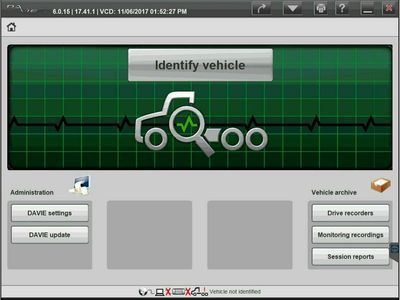
DAVIE4 is the current PACCAR dealer-level diagnostic software for North American MX-11 and MX-13 engines. It runs on a Windows laptop, talks to the truck through an RP1210-compliant adapter, and handles the engine and aftertreatment side: fault code retrieval and clearing, parameter changes (with the right authorization), forced regens, injector cutout tests, NOx sensor resets, calibration updates, and ECM reflashes. It does not, on its own, cover every chassis module on the truck. For body controllers, instrument cluster, and certain chassis-side functions, you also need PACCAR ESA running alongside it.

DAVIE4 is sold through PACCAR's distribution channels and a small number of authorized resellers, with lifetime licenses commonly priced around $3,000 to $3,500 depending on what's bundled. A typical DAVIE4 package will include DAVIE4 itself, ESA cab and chassis coverage, ePortal access, and PVP (PACCAR Vehicle Pro) for parameter changes. The license is tied to the laptop and the dealer/customer account behind it. Activation is not instant — there is usually a multi-day verification step on PACCAR's side before you're up and running.

About DAVIE 5 / DAVIE RP. You'll see references online — particularly from European resellers and gray-market software vendors — to DAVIE 5.6.1 and similar version strings. That lineage is primarily DAF-side in Europe and is not the standard, supported software for current-model North American PACCAR MX engines. PACCAR's North American MX dealer environment is DAVIE4. We treat the DAVIE 5 / DAVIE RP situation carefully because it changes, and because there are unauthorized copies floating around that we will not touch and do not recommend. If you have a specific year/model and you're trying to figure out which version covers it, call us — we'll tell you what we know and what we don't.

The Authentication Reality

This is the part that frustrates owners who are used to Cummins or Detroit. PACCAR is the most locked-down major OEM for aftermarket service.

To get DAVIE4 working on a laptop, the user has to be authenticated against the PACCAR dealer/customer portal. That portal access is gated. To make parameter changes — road speed, cruise speed, idle shutdown, PTO settings, certain emissions thresholds — you generally need PVP (PACCAR Vehicle Pro), which is itself permission-tiered (Basic, Standard, Master, Admin). To do a full ECM reflash from PACCAR's calibration servers, you need an active connection to the PACCAR portal during the operation. ESA likewise requires valid dealer credentials, and unauthorized copies of ESA pulled off forums are old, unsupported, and do not get current flash files.

What you can do without dealer authentication, using legitimate aftermarket tools (Jaltest, JPRO, TEXA, plus quality bidirectional generic scan tools): read and clear faults, run forced regens, run aftertreatment service routines, perform cylinder cutout / compression tests, exercise injectors and DEF dosing, read live data, perform many bidirectional tests on chassis systems. That covers the vast majority of day-to-day shop work. Jaltest in particular has the deepest aftermarket PACCAR coverage — by Diesel Laptops' own published coverage matrix it offers nearly all of the dealer-level commands on MX engines, with the notable exception of certain parameter changes on early (2010-2012) models.

What still requires a dealer or someone with full DAVIE4 + PVP authorization: ECM reflash to the latest calibration, certain emissions-related parameter unlocks, programming a brand-new ECM after a replacement, and clearing certain inducement / derate states that PACCAR has chosen to lock behind a portal-authenticated session. Be realistic about that line when you sell a job to a customer. There are PACCAR conditions where the right answer is "we'll diagnose it and get the parts in, but the final reflash will need a dealer trip, here's why."

Adapters and Hardware

For DAVIE4, the recommended adapter is the Nexiq USB-Link 3. It is the adapter PACCAR's documentation points at, and it is the one most resellers ship in their DAVIE4 starter kits. Other RP1210-compliant adapters can work — Noregon DLA+ 2.0 is one we see frequently — but compatibility is not guaranteed across every DAVIE4 function. If you're already running a USB-Link 3 for Cummins INSITE or Detroit DiagnosticLink, you're in good shape; one good adapter will cover you across the major OEMs.

RP1210 driver setup matters. DAVIE4 wants to see the adapter through its RP1210 driver, not a generic USB device. After installing DAVIE4, you set the adapter inside DAVIE's connection settings and confirm the protocol is set correctly for the truck (J1939 is the workhorse on these MX engines). On older MX trucks you may also see J1708 traffic on certain modules, though that has largely been retired on current-generation hardware.

For the chassis side via ESA, the same adapter generally works. The bigger gotcha on ESA is the laptop's network connectivity to the PACCAR portal during operations that pull data or files from PACCAR's servers. If your shop firewall blocks certain ports, ESA will throw vague errors that look like adapter problems but are actually network problems. Get IT involved early.

Common Service Pain Points on PACCAR MX Engines

If you are pricing parts and labor on PACCAR work, these are the recurring jobs.

Aftertreatment / SCR / DEF. The DEF dosing system is a frequent fault generator. DEF doser failures, DEF line freezing, DEF heater faults, NOx sensor failures (both inlet and outlet), and SCR catalyst aging codes all show up regularly. Forced regens are routine. The MX-13 CARB-compliant configuration with twin-canister SCR adds complexity and additional sensor positions. Aftermarket scan tools handle the regens and the basic resets fine; what they don't always handle is a full SCR system relearn after catalyst replacement, which can run into authentication walls.

EGR. EGR cooler cracking and EGR valve carboning are the classic MX-13 issues. You'll see this come in as derate codes, white smoke / coolant loss, or random aftertreatment efficiency codes that turn out to have an EGR root cause. Diagnostic flow is the same as any other heavy-duty diesel — pressure tests, scope work on the EGR position sensor — but the parameter resets after the repair are where authorization tier matters.

Fuel system. High-pressure common rail at 36,000 PSI on the MX-11 and similar on the MX-13. Injector failures and rail pressure regulator issues are not unusual on higher-mileage engines. Cylinder cutout tests through DAVIE4, Jaltest, or a quality generic bidirectional tool will isolate the bad hole. Coding new injectors after replacement is the part where the tool tier starts to matter — Jaltest covers most of it on MX, JPRO is more limited.

DPF and forced regen. Routine work. You do not need DAVIE4 for a basic forced parked regen on an MX-13; any decent heavy-duty scan tool will do it. Where you might need to escalate is when the truck is in a hard derate ladder that requires a portal-authenticated reset, or when DPF differential pressure sensors / soot load values need a service reset that some aftermarket tools won't expose.

Derate ladders and dealer-only resets. PACCAR has several inducement levels and specific clearable / non-clearable states. Some of those will only clear after the underlying fault is repaired AND a properly authorized session resets them. If you're chasing a truck stuck at 5 mph with a clean repair behind it, this is the most likely culprit, and it's the most likely reason you'll end up making a dealer call.

What Your Shop Actually Needs

Three realistic kit tiers.

Tier 1 — General mixed-fleet shop, occasional PACCAR work. Jaltest with PACCAR coverage, a Nexiq USB-Link 3, and a laptop with the RP1210 driver stack set up properly. This will cover faults, regens, parameter changes on most year MX engines, bidirectional tests, and the chassis side adequately. For the rare jobs that need OEM-level authentication, refer out or partner with a local Kenworth or Peterbilt dealer.

Tier 2 — Heavy PACCAR volume, fleet contract, or independent specialist. Jaltest plus DAVIE4 plus ESA, with PVP at whatever permission tier your business case justifies. This is the configuration that lets you do the full job in-house — calibration updates, parameter unlocks, post-repair resets — and it's the configuration that makes financial sense if PACCAR is more than 20–30 percent of your work. Budget the DAVIE4 license, the PACCAR portal account setup time, and a dedicated laptop that you keep clean and current on calibration files.

Tier 3 — Multi-OEM dealer-level coverage. Jaltest as the universal aftermarket layer, plus the OEM packages for each brand you service: DAVIE4 + ESA for PACCAR, INSITE for Cummins, DiagnosticLink for Detroit, ServiceMaxx for International, and so on. JPRO Noregon as a second-opinion universal tool. This is the full-shop setup; it is not cheap, but it is what big independent service centers actually run.

Honest guidance: even in Tier 3, there will be PACCAR operations where your customer might be better served by a dealer trip — particularly anything involving warranty work or OEM-mandated software updates. Don't oversell what you can do, and don't undersell either. Aftermarket coverage on PACCAR has gotten genuinely good in the last five years.

PACCAR Diagnostic Capability Matrix

The realistic split between aftermarket tools, DAVIE4, and dealer-only operations on a current MX-11 / MX-13:

Function Aftermarket (Jaltest / JPRO / TEXA) DAVIE4 + ESA Dealer Auth Required
Read / clear DTCsYesYesNo
Live data, freeze framesYesYesNo
Forced parked regenYesYesNo
Cylinder cutout / compression testYes (Jaltest strong)YesNo
DEF dosing test, NOx sensor resetYesYesMost cases
Injector trim coding after replacementJaltest yes; JPRO limitedYesSometimes
Road speed / cruise / idle parameter changeJaltest yes (most years); JPRO limitedYes (with PVP tier)For certain emissions params
Aftertreatment relearn after catalyst replacePartialYesOften
ECM reflash to latest calibrationNoYes (online to PACCAR)Yes
New ECM programming / VIN writeNoYes (with auth)Yes
Clear locked inducement / derateSometimesYesOften required
Body / cab module programmingLimitedESA yesSome functions

Frequently Asked Questions

Can Jaltest or JPRO flash an MX-13 ECM? No. ECM reflash to current calibration runs through PACCAR's portal and requires DAVIE4 with valid dealer/customer authentication. Aftermarket tools do not have access to PACCAR's calibration files. Jaltest and JPRO can do almost everything else short of that.

What's the deal with DAVIE 5 / DAVIE RP? The DAVIE 5 lineage you'll see in some online listings is primarily a DAF (Europe) software branch. North American PACCAR MX dealer service today runs on DAVIE4. There are unauthorized DAVIE 5 copies floating around online — we don't sell those, don't recommend them, and will not support a setup built around them. If you have a specific North American truck and a question about which DAVIE version is current for it, call and we'll walk you through what we know.

Can I do parameter edits without going to a dealer? Many of them, yes. Jaltest with current PACCAR coverage handles road speed, cruise, idle settings, PTO config, and a long list of other parameters on most year MX engines. The exceptions tend to be specific emissions-related parameters and certain locked items on the very latest calibrations, which PACCAR keeps behind portal authentication. If a particular parameter matters to your job, ask before you buy the tool.

Do I need DAVIE for a basic forced regen on an MX-13? No. Any decent heavy-duty bidirectional tool will run a parked regen on an MX engine. DAVIE4 isn't required for that operation. DAVIE4 becomes necessary when the truck is in an inducement state that requires an authenticated reset, when you're doing post-repair calibration work, or when you're doing dealer-tier programming.

What about PX engines — is that the same as Cummins? Yes, mechanically. The PX-7 is a Cummins 6.7 ISB and the PX-9 is a Cummins 8.9 ISL, with PACCAR-specific calibration and integration. Cummins INSITE will work with those ECMs as Cummins units. PACCAR-side software handles the chassis integration and the body modules. For most PX-7 / PX-9 service work, INSITE plus a quality aftermarket tool covers the realistic job mix.

Is DAVIE4 a one-time purchase or a subscription? The most common DAVIE4 license sold through authorized resellers is a lifetime license, in the $3,000–$3,500 range, including ESA and PVP. There can be additional costs for premium calibration access and for higher PVP permission tiers. Activation requires PACCAR-side processing — typically a few business days, not instant.

What adapter should I run for DAVIE4? Nexiq USB-Link 3 is the recommended and most universally supported adapter. Noregon DLA+ 2.0 works for many functions but compatibility isn't guaranteed across the entire DAVIE4 feature set. If you're standardizing your shop on one adapter for Cummins, Detroit, and PACCAR work, the USB-Link 3 is the right call.

Why Buy PACCAR Tools and Software From Heavy Duty Truck Diagnostics?

We are a working diagnostic shop selling the same tools we use. About 90 percent of our sales close on the phone, and there's a reason for that: when a shop owner calls about PACCAR coverage, they don't want a brochure, they want a senior tech telling them, "for what you're describing, here's what'll cover it, here's what won't, and here's where you'll still need to call a Kenworth dealer." We give that answer straight.

On PACCAR specifically, we are honest about the locked-down ecosystem. We will tell you where Jaltest is the best aftermarket answer (it usually is on MX engines). We'll tell you when DAVIE4 is genuinely worth the spend (you do enough PACCAR volume to justify the license and the portal account). We'll tell you when neither of those is the right move and a dealer relationship is the cheaper path. We sell DAVIE4 licenses through legitimate channels with proper activation, we sell Jaltest with full current PACCAR coverage, and we sell the Nexiq USB-Link 3 adapters and RP1210 driver setups to make either of them work right on day one.

We don't sell pirated DAVIE or pirated ESA. We don't ship you a USB drive with a cracked ISO and wish you luck. What we ship turns on, stays current, and has support behind it when something breaks. If your situation calls for a different answer than the one we sell, we'll tell you that too — refer-outs are part of how we work.

Call 866-217-0063 for quick answers and help!

Frequently Asked Questions

What engines does PACCAR DAVIE cover?

DAVIE covers the PACCAR MX-11 and MX-13 engines as installed in Peterbilt and Kenworth Class 8 trucks. Forced regens, ash resets, parameter writes, and module reflash all run through DAVIE.

Is the MX easier to regen than other Class 8 engines?

Compared to other modern HD platforms, the MX is one of the more cooperative engines for forced regen — when conditions are met, DAVIE accepts the command and runs cleanly. Watch for SPN 3251 FMI 16 (delta-P sensor drift), a common MX failure that blocks regens silently.

Which adapter pairs with DAVIE?

A Nexiq USB-Link 2 or USB-Link 3 is the standard pairing. RP1210 compliant and the same adapter works across most other OEM software stacks too.

Do I need DAVIE if I have JPRO or Jaltest?

For routine fault-code reads and forced regens, modern aftermarket platforms cover MX cleanly. For parameter writes, ECM reflash on later GHG17–21 model years, and warranty-level work, DAVIE is the right tool. Many shops run aftermarket day-to-day plus DAVIE for the deeper jobs.

View All FAQs →

Resources & Buyer Guides

HDT

Ready to Upgrade Your Diagnostic Game?

Our experts are here to help you choose the right PACCAR solution for your shop. Call now or shop online today.