Professional DiagnosticsOEM-level capabilities for commercial trucks, buses, ag, construction & more.
Shop Detroit Diagnostic Tools
Detroit DiagnosticLink (DDDL) is the OEM diagnostic platform for the DD13, DD15, and DD16 engine families. Both Standard and Pro tiers are available — Pro adds parameter writes and reflash, Standard handles forced regens and ash resets cleanly. Pairs with a Nexiq USB-Link 2 or 3.
- OEM-Level Software
- DD13 / DD15 / DD16
- Reliable Ash Reset
- Standard & Pro Tiers
Expert SupportU.S.-based technicians with dealer and fleet experience ready to help.
Ready-to-Run KitsPreconfigured software with everything you need to get up and running fast.
Financing Available0% APR options available on qualifying orders over $1,500.
Featured Detroit Products
View All Detroit Products →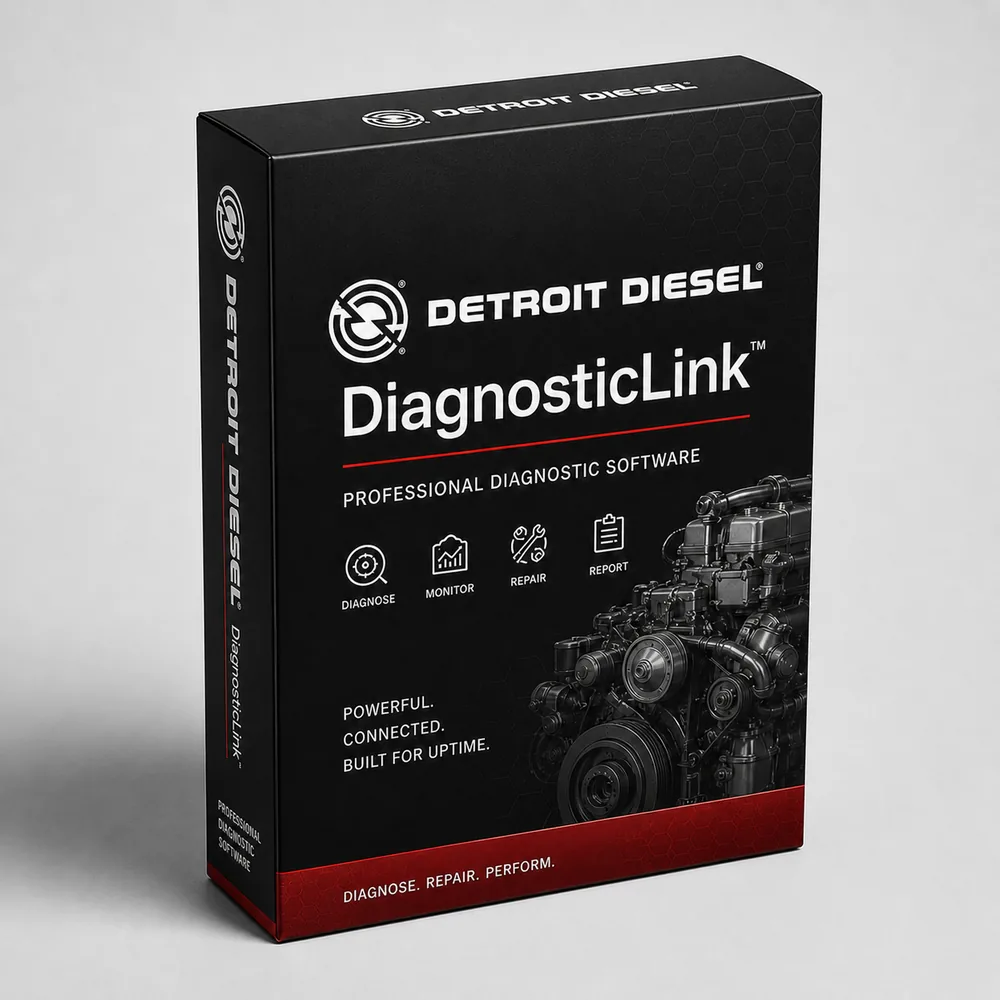
Detroit DDDL Pro + NEXIQ + Toughbook Dealer Package
Flagship: DDDL Professional with NEXIQ scanner + FZ-55 Toughbook
Call for price View Product
Detroit DDDL Standard + NEXIQ + Toughbook Dealer Package
DDDL Standard with NEXIQ scanner + FZ-55 Toughbook
Call for price View Product
Detroit DDDL Pro v8 + v6 Combo License (12-Month)
12-month DDDL Professional license — install on your own laptop
Call for price View Product
Detroit DiagnosticLink Pro 1-Year License
Annual DDDL Professional subscription
Call for price View Product
Detroit DiagnosticLink Standard 1-Year License
Annual DDDL Standard subscription
Call for price View Product
Why Choose Detroit?
- Comprehensive vehicle coverage
- OEM-level diagnostics & programming
- Regular software updates & releases
- Rugged hardware built for the shop
- Backed by HDT expert support
Detroit DDDL Compatibility
Detroit Diesel Diagnostic Link covers the current Detroit on-highway lineup plus legacy Series 60 with the v6 combo license.
| Engine family | Model years | Coverage |
|---|---|---|
| DD15 (Class 8 long-haul) | 2007–current | Full reflash + programming (DDDL Pro) |
| DD13 (regional / vocational) | 2010–current | Full reflash + programming (DDDL Pro) |
| DD16 (heavy vocational) | 2010–current | Full reflash + programming (DDDL Pro) |
| DD8 (medium-duty Western Star / Cascadia) | 2017–current | Full reflash + programming (DDDL Pro) |
| DD5 (medium-duty) | 2017–current | Full reflash + programming (DDDL Pro) |
| Series 60 (legacy 12.7L / 14.0L) | 1987–2011 | Read codes, programming via v6 combo license |
| MBE 4000 / MBE 900 (Mercedes for North America) | 1998–2010 | Read codes, parameter access on v6 combo |
DDDL Professional adds reflash, parameter programming, and parameter-locked feature access. DDDL Standard handles diagnostics, clear codes, and forced regens but cannot reflash. NEXIQ USB-Link 3 is the standard adapter; Detroit also publishes a dealer-specific adapter list.
Coverage data verified against publicly available manufacturer documentation as of May 2026. Specific engine year cutoffs and feature support change as manufacturers publish software updates. Call (800) 399-9495 to confirm coverage for a specific truck before purchase.
Detroit DiagnosticLink (DDDL) Pricing
Genuine Detroit Diesel diagnostic software. Same product the dealer technician runs.
| License / Package | Term | Price |
|---|---|---|
| DDDL v8 & v6 Combo Professional | Perpetual license, full reflash + programming | $2,695 |
| DDDL v8 & v6 Combo Standard | Perpetual license, diagnose + clear + regen (no reflash) | $1,089 |
| DDDL Professional 12-Month | 12-month subscription | $2,695 |
| DDDL Standard 12-Month | 12-month subscription | $1,089 |
| DDDL Pro + NEXIQ + FZ-55 Toughbook | Complete dealer package, pre-installed | $5,990.98 |
| DDDL Std + NEXIQ + Toughbook | Standard license dealer package | $3,395 |
Prices reflect current MSRP. Multi-license fleet pricing available — call (800) 399-9495. 0% APR financing on $1,500+.
Common pricing questions
How much does Detroit DDDL cost?
DDDL Professional (full reflash + programming) is $2,695 perpetual or 12-month. DDDL Standard (diagnose + clear + forced regen, no reflash) is $1,089 perpetual or 12-month. Toughbook dealer packages run from $3,395 (Standard) to $5,990.98 (Professional with NEXIQ adapter and FZ-55 Toughbook).
What's the difference between DDDL Pro and Standard?
Professional adds reflash, parameter programming, and dealer-level calibration access — required for engine ECM updates and parameter changes. Standard reads codes, clears codes, runs live data, and triggers forced regens but cannot reflash. Most independent shops buy Standard; engine rebuilders and Detroit-heavy fleets buy Professional.
Can DDDL Standard force a regen?
Yes. Both Standard and Professional license tiers run stationary forced regens on Detroit DD13/DD15/DD16 engines. The difference is reflash and parameter programming — those require Professional.
What adapter works with DDDL?
NEXIQ USB-Link 3 is the most common adapter for DDDL. DDDL also supports several other RP1210 adapters. Our DDDL packages typically pair with NEXIQ for compatibility across other diagnostic platforms (INSITE, JPRO, etc.).
Does DDDL include the Detroit chassis modules?
Yes. DDDL covers Detroit DD13/DD15/DD16 engines plus the related chassis modules on Freightliner Cascadia, Western Star, and Daimler Class 8 platforms. Aftertreatment, ABS, transmission integration, and body controllers are included.
Is there an annual subscription cost after year one?
Perpetual DDDL licenses keep working after year one but stop receiving updates. To get current model-year coverage, you renew the subscription. 12-month DDDL licenses are annual subscriptions only.
Detroit DDDL Licensing Terms
DDDL Professional and Standard licensing structure.
Term type
DDDL Pro and Standard available as perpetual purchase or 12-month subscription. Subscription includes all updates during the term.
Activation
Laptop motherboard fingerprint at first activation; requires online activation through Detroit Diesel servers.
Seat policy
Single seat per license. Multi-bay shops require multiple licenses; fleet pricing available.
Transfer
Limited transfer in cases of hardware failure with proper documentation. Detroit Diesel reseller channel must approve.
Lapse behavior
Perpetual licenses keep working on existing database after lapse; stop receiving late-model coverage and TSB updates. 12-month subscriptions stop functioning at term end if not renewed.
Pro vs Standard
Pro adds reflash, parameter programming, locked-feature unlock. Standard handles diagnostics, clear codes, forced regen but cannot reflash. Both share the same activation rules.
Licensing details verified against publicly available manufacturer documentation as of May 2026. Specific transfer policies, seat-pricing tiers, and renewal pricing change at the manufacturer's discretion. Call (800) 399-9495 to confirm terms before purchase, especially for fleet / multi-seat orders.
Shop Detroit by Category
Find the Right Detroit Tool
Answer a few quick questions and we'll help you find the best tool for your shop's needs.
- Personalized Recommendations
- Expert Guidance
- Fast & Easy
Trusted by Shops & Fleets Nationwide
"Detroit gives us the coverage and reliability we need. HDT support is second to none."
Mike R.Diesel Tech — Midwest Fleet"The software is powerful and easy to use. Programming and diag in one platform saves us time and money."
James T.Shop Owner — Texas"HDT's ready-to-run kit had everything we needed to get started right out of the box."
Sarah L.Fleet Manager — California"Great tools, great support, and fast shipping. Our go-to for heavy duty diagnostics."
David P.Lead Tech — FloridaPowerful Diagnostics. Proven Performance.
Capabilities vary by tool, software license, vehicle, and manufacturer requirements. Contact HDT to confirm compatibility.
Expert Phone SupportU.S.-based technicians
Setup & Training HelpGet started with confidence
Fast ShippingOrders ship same day
Warranty & SupportBacked by HDT
0% APR FinancingOn qualifying orders
Detroit is the engine you see most often when a Cascadia rolls onto the lift, and that alone makes it one of the two or three brands every heavy-duty shop has to be set up for. Detroit Diesel Corporation is owned by Daimler Truck North America (the same parent company that owns Freightliner and Western Star), and the engines, transmissions, axles, and aftertreatment hardware are all designed to work together inside that family. That tight integration is great for the OEM dealer network. It is also the reason an independent shop without the right software ends up calling the dealer for parameter changes, injector trim codes, and ECM reflashes.
This page covers what we sell for Detroit, what each tier of DiagnosticLink (DDDL) can actually do on the truck, the adapters that work with it, and the real-world service issues that drive most Detroit work orders today. If you have read our Cummins Insite page, the layout will look familiar. Detroit and Cummins are the two engines that dominate Class 8 in North America, and most shops end up owning OEM software for both. The difference is that Detroit is more vertically integrated. The engine, the aftertreatment, the transmission (DT12), and the chassis controllers all talk to each other through a Daimler-designed network, and DDDL is the tool that was built to read it.
If you would rather skip the reading and just talk to a tech, call 866-217-0063. About nine out of ten Detroit kit sales close on the phone because every shop is a little different and a five-minute conversation usually saves a thousand dollars in the wrong hardware.
Who Detroit Is
Detroit Diesel started in 1938 as a division of General Motors. Penske Corporation bought it in the late 1980s, and DaimlerChrysler took majority ownership in 2000. Today the brand sits inside Daimler Truck North America alongside Freightliner, Western Star, and Thomas Built Buses. Engine assembly happens at the Redford, Michigan plant, where Detroit also produces axles and DT12 automated manual transmissions. The "Detroit" name in the current marketing covers the whole powertrain, not just the engine, and that matters when you are diagnosing a fault that crosses module boundaries.
For a shop, the practical takeaway is this: when you see a Cascadia or a Western Star with a Detroit engine, you are usually looking at a Detroit transmission, a Detroit front and rear axle, and Daimler-designed aftertreatment. One software package (DDDL) covers the engine, the aftertreatment controllers, and the DT12. Brake systems and a few accessory modules will still need their own tools, but the powertrain is one ecosystem.
The Engine Lineup
Detroit's current on-highway lineup is three engines: DD13, DD15, and DD16. Below that there are two medium-duty engines, the DD8 and DD5. And a huge installed base of legacy Series 60 and MBE engines is still running.
- DD13 — 12.8L inline-six. The lighter, more fuel-efficient on-highway engine. Used in regional haul, distribution, and increasingly in vocational specs. The current Gen 5 DD13 is rated up to about 505 hp depending on configuration. You'll see it in Cascadia day cabs, M2 112s, and Western Star vocational chassis.
- DD15 — 14.8L inline-six. The volume engine on US highways. Current generation runs 425-505 hp and 1,550-1,850 lb-ft torque, with applications in the fourth- and fifth-generation Cascadia and the Western Star 49X. This is the engine you will see more than any other under a Class 8 hood.
- DD16 — 15.6L inline-six. The heavy-spec engine. 500-600 hp, up to 1,950 lb-ft. Used in the Western Star 49X and 57X for heavy haul, logging, and other vocational duty where you actually need that torque curve.
- DD8 — 7.7L inline-six medium-duty. 260-350 hp, up to about 1,050 lb-ft. Found in the Freightliner M2 106 and 108SD. Detroit's answer to the Cummins L9 in vocational, refuse, and bus work.
- DD5 — 5.1L inline-four medium-duty. 210-240 hp. M2 106 only. Compact pickup-and-delivery work.
The legacy stuff is just as important as the current lineup if you do any used-truck or fleet maintenance work. The Series 60 (11.1L, 12.7L, and 14.0L) ran from 1987 through 2011, and the trucking industry is still full of them. Buses, tankers, vocational chassis, and a long tail of older Cascadias and Columbias are still on Series 60 power. The 12.7L was discontinued in 2007 in favor of the 14L, and the entire Series 60 was replaced by the DD15 in 2011 — but parts and service demand has not dropped off the way you would expect. The MBE 4000 and MBE 900 Mercedes-sourced engines from the same era show up in Sterling, Freightliner, and some Western Star units. DDDL still supports these legacy engines, which is one of the reasons it is worth owning even if you mostly work on newer iron.
Where You'll See Detroit
The single biggest application is the Freightliner Cascadia. Cascadia has been the volume leader on US highways for over a decade. If your shop services any kind of long-haul operator or owner-op fleet, you are seeing more Cascadias than anything else, and most of them are DD13- or DD15-powered. The fifth-generation Cascadia (current) is heavily Detroit-integrated: Detroit engine, DT12 transmission, Detroit axles, Detroit aftertreatment, and Detroit Connect telematics.
Western Star 49X (vocational) and 57X (on-highway premium) trucks run DD13, DD15, and DD16 power. The 49X is the truck you see in heavy haul, logging, oilfield, and dump work. Freightliner M2 106 and 108SD medium-duty chassis use the DD5 and DD8 in vocational, bus, refuse, and delivery roles. You will also occasionally see Detroit power in school buses (Thomas Built) and in some specialty applications, though Cummins still has a strong share in the bus market.
Older Series 60 work shows up across just about every chassis brand from the 1990s and 2000s — Freightliner Classic and Columbia, Western Star 4900, International, Sterling, Volvo (a small number), and a long list of vocational chassis. If you do work on transit buses, tour buses, or yard tractors, you will run into Series 60 regularly.
DiagnosticLink (DDDL) — Standard vs Professional
DDDL is the OEM software for Detroit. The current shipping version is DiagnosticLink 8.x (8.23 SP3 at the time of writing, with updates released every few months). It replaced the older DDDL 7.x and DDRS 7.x products around 2014 — the Standard tier is the descendant of the old DDDL 7.x, and the Professional tier is the descendant of the old DDRS 7.x reprogramming station.
The two tiers handle most of the work an independent shop runs into, but they are not interchangeable. Here is the honest split:
| Capability | DDDL Standard | DDDL Professional |
|---|---|---|
| Read fault codes (active and inactive) | Yes | Yes |
| Live data, all controllers (MCM, ACM, CPC, transmission) | Yes | Yes |
| System tests and routines (cylinder cutout, injector tests) | Yes | Yes |
| Forced parked regen / stationary regen | Yes | Yes |
| DPF service / ash reset after cleaning | Yes | Yes |
| Edit customer-accessible parameters (idle shutdown, road speed, cruise) | Yes | Yes |
| Aftertreatment service routines (NOx sensor learn, DEF priming) | Yes | Yes |
| Reprogram / reflash MCM, ACM, CPC firmware | No | Yes |
| Insert injector trim codes after injector replacement | No | Yes |
| Module replacement programming (writing VIN, hardware swap) | No | Yes |
| Edit password-protected engine parameters (rated power, governor) | No | Yes |
| Per-event programming fee paid to Detroit | N/A | ~$280-$300 per event |
Standard is enough for most diagnostic work — fault codes, live data, regens, ash resets, and the everyday routines. The reason shops buy Pro is the day a Cascadia comes in with a failed injector or a bricked MCM, and you need to write injector trim codes or reflash a module. Without Pro, that truck goes to the dealer.
One thing nobody likes about DDDL Pro: each programming event costs a fee paid to Detroit, separate from your software license. The going rate is around $280-$300 per event for the operations that require it (firmware reflashes and certain ECU writes). A reseller selling you "DDDL Pro" is selling you the license — the per-event fees are a separate transaction with Detroit through the software itself. Budget for that. A shop that does a handful of injector swaps and module replacements per month is still well ahead vs. dealer trip charges, but the math has to make sense for your volume.
System requirements are reasonable: Windows 10 or 11 64-bit, dual-core 2.0 GHz, 4 GB RAM minimum (8 GB recommended), 40 GB free disk. DDDL 8.23 dropped Windows 7 and 8 support. It runs fine on a modern Toughbook or any decent shop laptop.
Adapters and Hardware
DDDL doesn't care which adapter you use as long as it's RP1210-compliant and the drivers are clean. The two most common pairings:
- Nexiq USB-Link 3 — The default in most Detroit kits. Bluetooth and USB. Reliable RP1210 drivers. This is what we ship in our Detroit Complete Fleet Diagnostic Kit. If you only ever own one heavy-duty adapter, this is the one. It works for Detroit, Cummins, PACCAR, CAT, Allison, and pretty much every brand-specific OEM software you'll touch. See our Nexiq page for full details.
- Noregon DLA+ 2.0 — Same idea, slightly different driver stack. Some shops prefer the Noregon adapter because it pairs natively with JPRO. You can run DDDL on a Noregon adapter without any issues.
Cables you'll want in the kit: 9-pin Deutsch (Type 1 and Type 2 — the green and black plugs), a 6-pin Deutsch for older Series 60 trucks, and an OBD-II for the newer light-medium chassis. If you work on older 1990s Detroit equipment, you may also run into the DDR (Detroit Diesel Reader) port on pre-electronic-J1939 trucks. That's its own world and DDDL doesn't really cover it.
About ParaSITE: that's the older Detroit reprogramming/diagnostic platform from the DDEC III/IV era, mostly retired. If you see a reference to "ParaSITE" in older shop documentation, the modern equivalent is DDDL Pro. You don't need to track down ParaSITE for any current work.
What You Can and Can't Do With Aftermarket Tools
This is the question we get most often: "Do I need DDDL, or will JPRO / Jaltest / TEXA / Autel cover what I need?"
The honest answer: aftermarket tools cover about 70-85% of Detroit diagnostic work, and the gap is bigger than the spec sheets make it look.
What aftermarket can do reliably on Detroit:
- Read all SPN/FMI fault codes from the J1939 bus
- Live data on engine, transmission, ABS
- Forced parked regen on most model years
- DPF ash reset after cleaning
- Some bi-directional tests (cylinder cutout, injector buzz tests)
- Customer parameter changes on simpler items (idle shutdown timer, cruise)
What you generally can't do with aftermarket tools on Detroit:
- Reprogram or reflash the MCM, ACM, or CPC firmware
- Insert injector trim codes after injector replacement (this is the big one)
- Write VIN or chassis-specific parameters to a replacement module
- Edit password-protected engine parameters
- Some of the deeper aftertreatment service routines (DPF replacement procedures, NOx sensor pairing on certain model years)
The injector code thing trips up a lot of shops. Detroit injectors have a calibration code laser-etched on the body that has to be entered into the MCM after replacement so the ECU can compensate for that injector's flow characteristics. Skip this step and you get rough idle, cylinder balance faults, and sometimes a no-start. JPRO and Jaltest cannot do this on Detroit — DDDL Pro can. If your shop replaces Detroit injectors more than a couple times a year, DDDL Pro pays for itself.
Common Service Pain Points
Most Detroit shop visits today are aftertreatment-related. Detroit's One Box aftertreatment system (the integrated DPF/SCR/DOC unit introduced on the EPA10 and refined heavily on GHG14 and beyond) has been the source of most fleet headaches for the last ten years. The common failures:
- NOx sensors (inlet and outlet) — These fail often. SPN 3216, SPN 3226, and SPN 3712 codes are daily occurrences. Inlet sensor goes first usually, and ash erosion from a failing DPF substrate accelerates it.
- DEF doser clogs — White crystallized DEF buildup at the doser inlet screen reduces spray pattern. SCR efficiency drops and you get inducement codes (SPN 5246).
- DPF substrate failures — Cracked ceramic substrates inside the One Box. Usually the result of repeated incomplete regens or contaminated fuel.
- EGR cooler leaks — Coolant migration into the exhaust path is a known failure on certain DD15 model years. White smoke, coolant loss, and a slow walk to a cylinder failure if not caught.
- DEF quality faults — Bad DEF, water in DEF, or a contaminated tank. P207F and SPN 1761/4334 are the codes to watch.
- DPF regen failures — Truck won't complete a parked regen. Could be doser, NOx sensor, fuel pressure during regen, or aftertreatment hydrocarbon doser (the 7th injector on some configurations).
The other thing to know: on a connected truck, Detroit Connect Virtual Technician is already watching all of this. When a fault triggers Service Now or Service Soon, the truck telemeters fault data to Detroit's customer support center, and the fleet manager gets an email with a preliminary diagnosis and the nearest Detroit-authorized service location. This is a real consideration for independent shops — Virtual Technician is steering work to dealer networks. Your value as an independent is faster turnaround, better customer service, and the ability to handle the work before the fleet manager gets the email. The truck still ends up at your shop because the operator already has a relationship with you, but you need the tools to actually finish the job rather than punting it to the dealer for the reflash.
What Your Shop Needs
The kit recommendations break down by shop size and work type:
Owner-op or one-truck operation: A Detroit Advanced Handheld Scanner ($1,295) or DDDL Standard with a USB-Link 3. You can read codes, live data, run regens, do ash resets. If something needs reflashed, dealer trip. Total spend under $2,500.
Independent shop, mixed fleet: Detroit Complete Fleet Diagnostic Kit ($3,495) — DDDL Pro, USB-Link 3, full cable set. This is our most popular Detroit configuration because it covers the full diagnostic-and-programming workflow. Combined with JPRO or Jaltest for cross-brand coverage (PACCAR, Cummins, International, Volvo), you have a complete heavy-duty bay setup for under $10K.
Fleet maintenance shop: DDDL Pro on every shop laptop (multi-seat licensing available), plus a couple of dedicated reprogramming benches. Add the Detroit J2534 Programming Interface ($695) for some of the OBD-II side work on the medium-duty chassis. If you also run Cummins, your Cummins Insite setup uses the same Nexiq adapter, so you're not duplicating hardware.
Frequently Asked Questions
Does JPRO or Jaltest do everything DDDL does on Detroit?
No. JPRO and Jaltest are excellent for diagnostics, fault codes, regens, and most service routines. They cannot reflash Detroit modules and cannot write injector trim codes. For a pure-diagnostic shop they cover about 80% of the work. For a shop that does injector replacement, module replacement, or firmware updates, you need DDDL Pro.
Can I do a parked regen on a DD15 with an aftermarket tool?
Yes, on virtually any model year. JPRO, Jaltest, TEXA, Nexiq eTechnician, and Autel will all run a forced parked regen on a Detroit. DDDL Standard does it too. The regen itself is a J1939-standard command — the OEMs all support it.
What's the deal with programming events and per-event fees?
Detroit charges around $280-$300 per programming event when you reflash a module with DDDL Pro. That's separate from your software license. The fee is paid through the software itself when you initiate the reflash. It's a real cost — budget for it. If you do a handful of events a month it's still cheaper than dealer trips, but it's not "free" once you own Pro.
Will DDDL run on Windows 11?
Yes. DDDL 8.23 supports Windows 10 and Windows 11 64-bit. Windows 7 and 8 were dropped a couple of versions back. A standard shop laptop with 8 GB RAM and 64 GB free disk will run it fine.
Do I need ParaSITE or just DDDL?
Just DDDL. ParaSITE was the older DDEC III/IV-era reprogramming platform and is essentially retired. DDDL Pro covers the modern equivalent. If you have a stack of pre-DDEC IV trucks (mid-1990s and older Series 60), there are still some service procedures that pre-date the current DDDL workflow, but for everything from DDEC V forward, DDDL is the tool.
Will DDDL work on Series 60 and MBE engines?
Yes. DDDL covers DDEC IV, DDEC V, DDEC VI, MBE 4000, and MBE 900 in addition to the modern DD-series. This is one of the strongest cases for buying DDDL — it covers your legacy fleet work and your current Cascadia work in one package.
What about transmissions — does DDDL cover the DT12 and Allison?
DDDL covers the DT12 (Detroit's automated manual). For Allison automatics, you need Allison DOC. JPRO and Jaltest can do basic Allison work, but for serious transmission programming you want Allison's own software.
Why Buy Detroit Tools and Software From Heavy Duty Truck Diagnostics?
We sell the same Detroit hardware and DDDL licenses you'll find at the big online resellers, with a couple of differences that matter. First, every kit is configured by a tech, not a fulfillment clerk. When you call us at 866-217-0063, the person who answers actually services these trucks and knows which cables, adapter, and software tier match the work you're doing. That's how about 90% of our Detroit sales close — a five-minute conversation, then a configured kit shipped that day.
Second, we don't push DDDL Pro on a shop that only needs Standard. If your work is regens, ash resets, and fault diagnosis, the Standard license plus a USB-Link 3 is the right kit, and we'll tell you that. The same goes the other direction — if you're trying to save money by skipping Pro and you replace injectors regularly, you're going to lose more on dealer trips than the Pro license costs.
Third, we cross-stock with the other major heavy-duty brands you actually need: Cummins Insite, PACCAR Davie, CAT ET, JPRO, and Jaltest. Most shops end up owning a couple of OEM packages plus an aftermarket all-makes tool. We can put together that bundle in one shipment with one phone call.
If your shop is making the Detroit decision right now — Standard vs Pro, what adapter, what cables, whether you can use a tool you already own — call us before you buy. We've helped a few thousand shops make this exact call, and we're not selling you anything you don't need.
Call 866-217-0063 for quick answers and help!
Frequently Asked Questions
What is the difference between DDDL Standard and Pro?
Standard handles fault codes, live data, forced regens, and ash resets — enough for most independent shops. Pro adds parameter writes and full reflash capability, which you need for warranty work and dealer-level reprogramming. Pro requires manufacturer-issued credentials.
Can DDDL run a parked regen on a DD15?
Yes — and it is the cleanest tool for the job. DDDL walks through prerequisite checks (parking brake, neutral, coolant temp) and refuses to run if something is wrong, which is exactly what you want.
Which adapter pairs with DDDL?
A Nexiq USB-Link 2 or USB-Link 3 is the standard pairing. Older Detroit DDR adapters still work on legacy installs. We ship USB-Link 3 with all Detroit kits unless you request otherwise.
Do I need DDDL if I already run Jaltest or JPRO?
Aftermarket platforms run forced regens on Detroit reliably. Where they get thinner is ash reset on 2018+ ACM controllers — DDDL does it cleanly, aftermarket sometimes fails the routine. If you see Detroits regularly, the DDDL Standard license earns its keep.
Resources & Buyer Guides
Detroit DD15 Fault Codes Reference
How to choose the right kit for your shop.
Read Guide →Heavy Duty Scan Tool Comparison 2026
Explore software features and capabilities.
Read Guide →Why Authorized Resellers Matter
Understanding the difference and when to use each.
Read Guide →
Ready to Upgrade Your Diagnostic Game?
Our experts are here to help you choose the right Detroit solution for your shop. Call now or shop online today.